
26 February 2026

Let’s go through the top 8 main considerations for airport washroom design:
Jump to section
- Eliminating Negative Passenger Experience
- Designing for Continuous High Footfall
- Supporting Travellers with Luggage
- Supporting Travellers with Children
- Creating a Sense of Personal Space
- Enhancing Hygiene and Passenger Confidence
- Reducing Maintenance Pressure in 24/7 Operations
- Designing for Sustainability Without Compromise

These modular units, like the Dolphin ALAVO Mirror System, offer a practical way to manage flow, enhance comfort, and simplify maintenance within the heavy and time precious demands of airports.
With integrated touch free taps, soap dispensers, foam soap cartridge systems, LED lighting, paper towel dispensers, and high-speed low-energy behind mirror hand dryers, this washroom solution is easier to manage, maintain, and ensures a smoother, more hygienic, and stress free experience for passengers.

2. Designing for Continuous High Footfall
Airport washrooms must cope with constant demand. Peak periods are not occasional… they are routine, and washrooms can either slow the flow or quietly support it.
A poor washroom layout quickly leads to congestion, especially around vanity areas where traditional designs separate handwashing and drying into different zones.
This movement between wet areas creates:
- Queuing at basins and hand dryers
- Cross-traffic between users
- Water drips across floors
- Increased slip risk
- A heightened sense of crowding

3. Supporting Travellers with Luggage
Unlike many commercial environments, airport users are rarely empty handed.
Hand luggage, backpacks, duty-free bags, and suitcases all need temporary placement.
Without designated set-down areas or ‘clear zones’, passengers are forced to place belongings on wet vanity tops or floors, leading to clutter, inconvenience, and hygiene concerns.
Incorporating dedicated, dry set-down vanity areas within the airport washroom design provides a clear and practical solution.
When thoughtfully configured into the overall Mirror System design, the washpoint area maintains visual cohesion while improving usability, particularly for families and long-haul travellers with extra carry-on baggage.

4. Supporting Travellers with Children
Good airport washroom design isn’t just about appearance; it’s about how the washroom performs under real-world pressure.
Family travel is a constant in airports, yet many washrooms take a ‘one size fits all’ approach… mainly designed primarily for adults.
In many airports, dedicated family washrooms are limited or non-existent, forcing parents and caregivers to use the main facilities. This often means lifting children who can’t reach the taps, creating inconvenience and slowing the flow for everyone.
Mirror Systems with thoughtfully configured wash troughs can solve this inconvenience: they allow for a uniform, visually cohesive layout while offering the flexibility to incorporate a lower-height vanity or drop-down section for children. This means younger and smaller passengers can access washpoints independently without disrupting the overall design or flow of the washroom.
Thoughtful planning like this transforms an airport washroom from a high-traffic necessity into a space that actively supports the passenger journey.
Anticipating passenger needs rather than reacting to problems is one of the biggest goals to achieve in airport washroom design.

5. Creating a Sense of Personal Space
In high-capacity airports, passengers value a sense of individual space.
Airports can feel overwhelming, and the washroom should offer a brief moment of clarity, peace, and comfort.

6. Enhancing Hygiene and Passenger Confidence
In busy airport washrooms, passengers often worry about hygiene.
Manual taps, soap dispensers, and dryers are touched by thousands of people each day, and a passenger wouldn’t know when they were last cleaned.
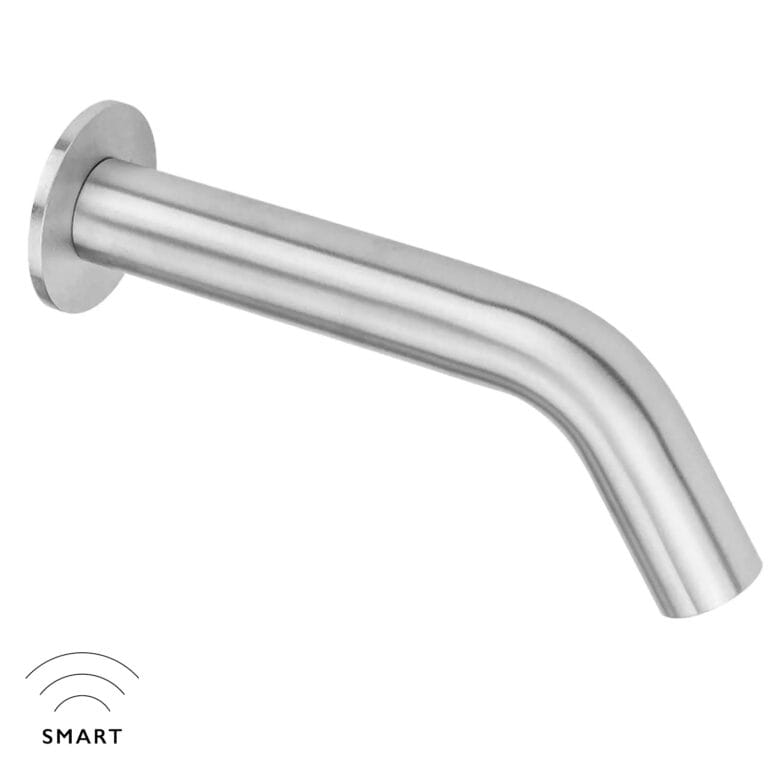
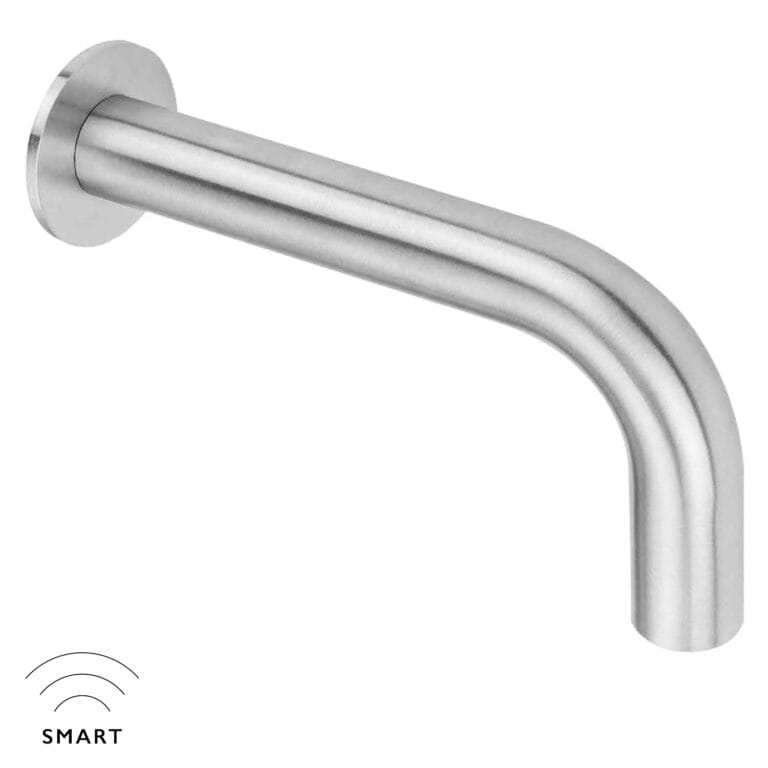
Thoughtful airport washroom design addresses this concern by incorporating touch free washroom products such as sensor activated commercial taps and touch free soap dispensers, all situated behind the mirror.
With touch free fittings, passengers can complete handwashing without contact, reducing the risk of cross-contamination.
Knowing the washpoint is touch free gives passengers confidence that their journey is hygienic and safe, and the result is peace of mind.
Learn how other airport washroom design challenges are being met with smart, focused airport solutions.

7. Reducing Maintenance Pressure in 24/7 Operations
Airport washrooms are high-demand, high-maintenance spaces, but thoughtful airport washroom design combined with SMART washroom technology makes management easier.
When connected to the Building Management System, real-time monitoring and automated alerts can notify facilities teams of low soap, low paper towels, tap issues, or hand dryer faults, reducing the need for routine checks.
This reduces operational strain and also ensures passengers consistently experience fully functional, hygienic, and convenient washrooms, thus enhancing the overall satisfaction throughout their journey.


8. Sustainable Design Without Compromise
Airports face growing pressure to meet environmental targets, and with washrooms among the highest-consumption areas, airport washroom design plays a crucial role in achieving meaningful sustainability improvements.
Mirror Systems that reduce water, soap consumption, and energy usage contribute significantly to sustainability objectives without compromising performance or passenger comfort.
Behind Mirror Systems with integrated SMART washroom solutions, such as touch free washroom products, play a key role here: taps can be timed to control water usage, drip free soap dispensers enable precise control over foam soap release, thus reducing soap wastage, and high-speed, low-energy hand dryers ensure passengers can complete handwashing quickly and efficiently.
This supports sustainability goals and improves passenger flow, leaving users with the perception of a fast, hassle-free handwashing experience.

The Future of Airport Washrooms
With hundreds of thousands of travellers and pieces of luggage moving through each day, even minor delays can trigger costly knock-on effects. As global passenger numbers continue to rise, airport washrooms are under growing pressure to operate efficiently while maintaining the highest standards of safety, comfort and hygiene.
Thoughtful airport washroom design, from touch free washroom products and SMART monitoring, to carefully considered layouts and dedicated clear zones, ensures washrooms meet these demands while enhancing the passenger journey.
When designed intelligently and anticipating the needs of every user, a washroom becomes more than a facility; it becomes a strategic asset that helps move passengers through the terminal efficiently, reduces operational risk, and ultimately protects airport revenue.
Speak to one of our Washroom Consultants today to see how you can deliver an exceptional airport washroom design that enhances the passenger experience.