
09 May 2025
Toilet Pan Seat: Doc T
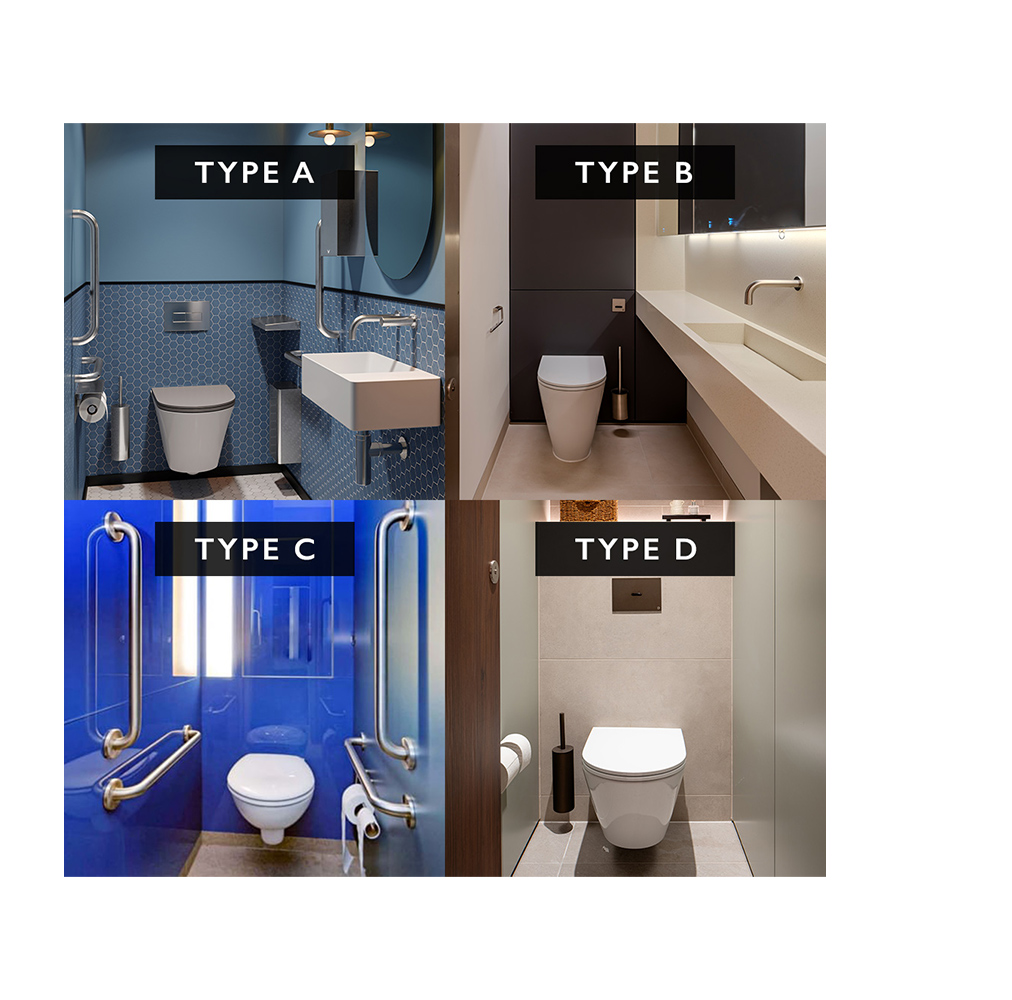
Approved Document T sets out four types of toilet accommodation:
Based on this statement, many assume this requirement applies to all the WCs referred to in Document T, including:
- Type A: Fully enclosed, self-contained ambulant universal toilet
- Type B: Fully enclosed, self-contained universal toilet (commonly called a superloo)
- Type C: Ambulant single-sex toilet cubicle (not self-contained)
- Type D: Single-sex toilet cubicle (not self-contained)
According to the new commercial toilet seat requirements, the common design provisions in Section 2 apply to all types.
Paragraph 2.13 says that visual contrast should be provided to help people locate and navigate toilet facilities, and that the toilet pan seat should contrast visually with the sanitaryware against which it is seen.
The document defines visual contrast as a perceived visual difference between one surface or element of a building and another, by reference to their light reflectance values (LRVs).
WHEELCHAIR ACCESSIBLE TOILET SEAT: DOC M
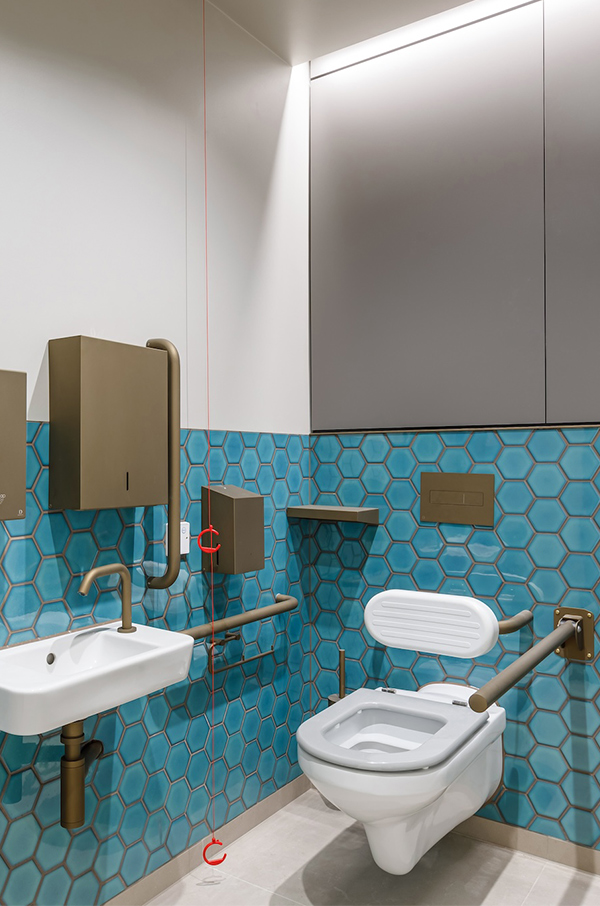
The commercial toilet seat requirements in Approved Document T do not cover or apply to a wheelchair accessible Doc M toilet seat, dimensions, washroom equipment, or wheelchair accessible washroom design. For those details, you need to refer to Approved Document M, Volume 2.
However, like Document T, Document Part M states that the surface finish of sanitary fittings and grab rails should contrast visually with the background wall and floor finishes. There should also be visual contrast between the wall and floor finishes.
Document M frequently refers to BS 8300-2:2018 for more detailed guidance. BS 8300 specifies that a WC seat should visually contrast with the WC pan and cistern. It also advises against a WC seat cover, which can obstruct side wheelchair transfers when raised, and recommends avoiding gap-front seats for better accessibility.
CONSIDER THIS WHEN SPECIFYING COMMERCIAL TOILET SEATS
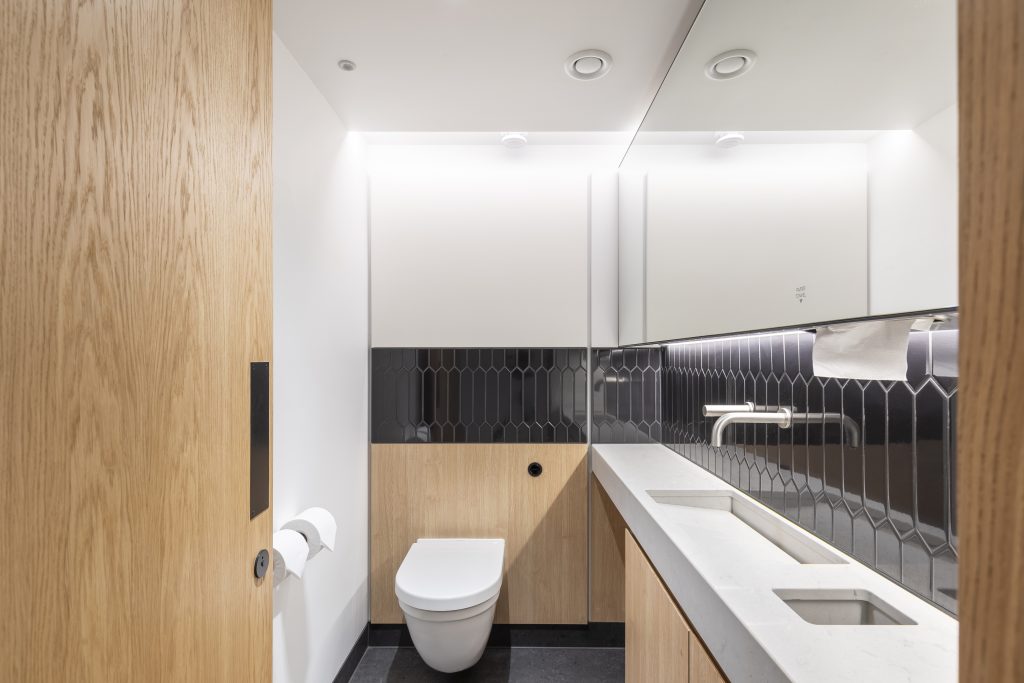
- Think in LRVs. Document T defines visual contrast by Light Reflectance Value. It does not set a minimum difference, so compare the LRV of the seat with that of the pan and judge whether the contrast is clear.
- Specify seat and pan together. With white sanitaryware, choose a seat in a clearly contrasting colour. The seat should not be treated as an afterthought.
- Check existing specifications. Review any drawn up under the original 2024 edition, particularly Type B and Type D toilets where white seats may have been specified.
- Apply Doc M and BS 8300 for accessible toilets. Remember, these commercial toilet seat requirements state the seat should contrast with the pan and cistern, with no or a gap-front seat and preferably with no seat cover.